

Carol Tweed
Published:
April 14, 2023
Last Updated:
Mar 19, 2026
As autumn arrives and temperatures begin to drop, it’s time to start preparing your swimming pool for winter. Properly winterising your pool helps maintain water quality, protect equipment, and make reopening your pool in spring much easier.
With a few simple maintenance steps, you can keep your pool clean and well-protected throughout the colder months.
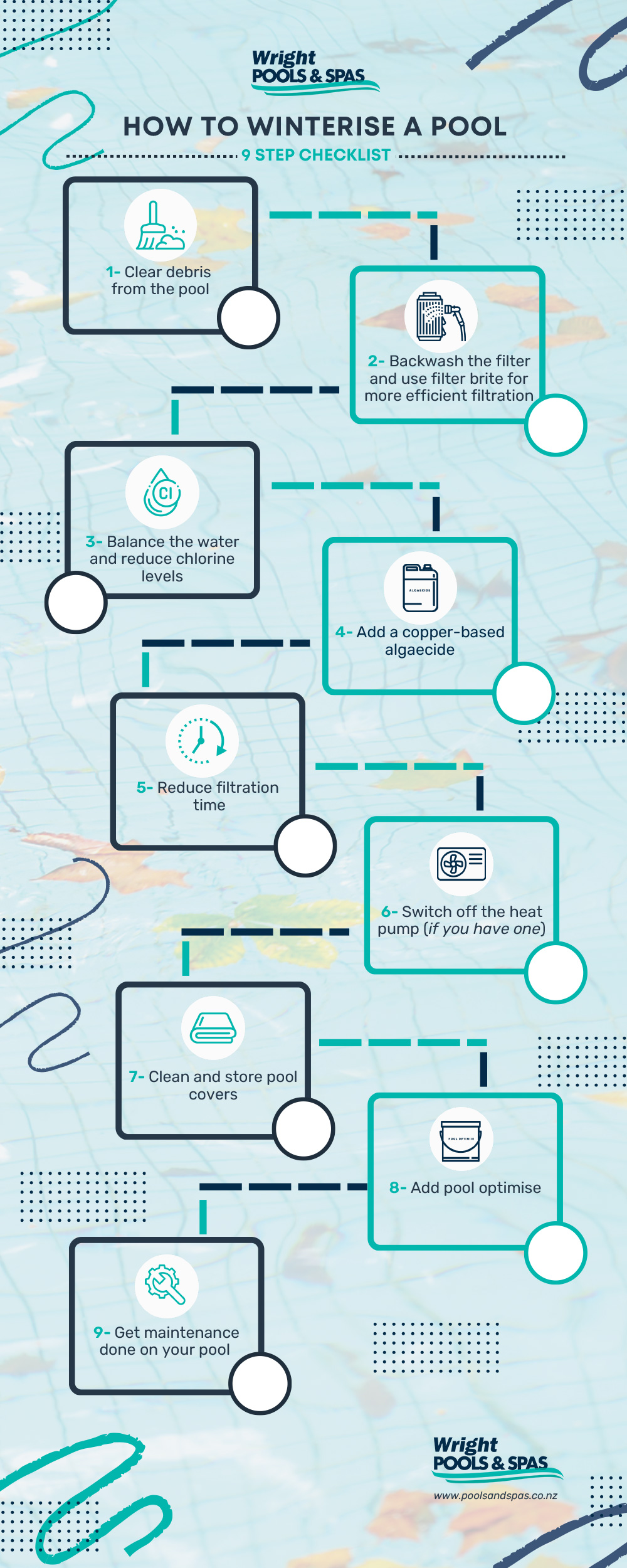
The following guide from the pool specialists at Wright Pools & Spas outlines a simple checklist for winterising your pool.
Do You Need To Winterise A Pool In New Zealand?
Yes. Even though winters in New Zealand are milder than in colder climates, swimming pools still require preparation for the winter months.
During winter, pools often experience:
- Falling leaves and organic debris
- Algae growth caused by phosphates in leaves
- Rainwater contamination
- Reduced chemical efficiency in colder water
Without proper winter preparation, these factors can lead to green water, algae growth, and extra cleaning when reopening your pool in spring.
Carol Tweed of Wright Pools and Spas explains:
“Every year in spring, we see customers who come into our shops and literally spend several thousand of dollars because they have done nothing before or during winter to maintain their pool. You can dramatically reduce this by testing your pool water monthly, a few hours' work, especially after storms and a couple of hundred dollars up front.”
Winterising your pool helps:
- Maintain balanced water chemistry
- Prevent algae growth
- Protect filtration equipment and other componentry
- Reduce maintenance when reopening the pool
9-Step Pool Winterisation Checklist
1. Clear Debris From The Pool
Remove any leaves, dirt, or debris from the pool before winter begins.
Leaves contain phosphates, which act as nutrients for algae. If debris remains in the pool, it can contribute to algae growth during winter.
Cleaning the pool thoroughly and undertaking regular debris removal during winter, especially after storms, will make reopening the pool much easier in spring.
2. Backwash The Filter And Clean The Filter Media
Ensure your filtration system is clean before winter.
Backwash the filter and use Filter Brite to clean the filter media and improve filtration efficiency.
A clean filtration system helps maintain water clarity while the pool is used less frequently.
Carol explains, “The cheapest, easiest and most efficient way to maintain good water is quality filtration.”
3. Balance The Water And Reduce Chlorine Levels
Balanced pool water is essential before winter.
Bring a water sample to Wright Pools & Spas for a professional water test to help ensure your pool chemistry is properly balanced.
During winter, chlorine levels should be maintained at a free chlorine level of around 1–2 ppm, once the water temperature has dropped below 13 degrees.
4. Add A Copper-Based Algaecide
Algae can still grow during colder months.
Adding a copper-based algaecide such as Algatac or MSA II helps prevent algae growth by releasing copper ions into the water.
“It is important that a quality product is used. Some copper based algaecides may contain uncheleated copper which causes lots of problems to the pool surface and equipment,” says Carol.
This helps keep the pool water algae free while the pool is not in regular use.
5. Reduce Filtration Time
During cooler months, pools require less filtration. Once pool water temperatures are consistently below 13 degrees, you can drop the filtration times.
Recommended filtration times:
- Autumn: around 6 hours per day
- Winter: around 2-4 hours per day
Reducing filtration time saves electricity and reduces wear on pool equipment.
6. Switch Off The Heat Pump (If You Have One)
If your pool uses a heat pump, it can usually be switched off once the swimming season ends. Turning off the heat pump during winter helps reduce electricity costs.
7. Clean And Store Pool Covers
Pool covers should be cleaned and used correctly before winter.
- Floating covers: rinse with clean water, dry and store in a dry place.
- Debris covers: install them to help prevent large leaves and debris from entering the pool
- Electric, sealing automatic covers: keep cover in situ, gently brush the surface to remove debris
Using a pool cover can significantly reduce debris entering the water during winter.
It’s important to keep your pool cover free of debris during the winter months especially after storms
8. Add Pool Optimise
Adding Pool Optimise helps improve water clarity, suppresses algae growth and supports sanitiser performance.
Pool Optimise helps:
- Improve sanitiser efficiency
- Clarify the pool water
- Suppress algae growth
- Maintain water quality during winter
9. Schedule Pool Maintenance
Winter is a good time to complete pool maintenance.
This may include:
- Servicing pool pumps
- Replacing filtration media
- Servicing automatic chlorinators
- Inspecting pool equipment
Wright Pools & Spas offers professional pool servicing to help prepare your pool for winter.
Real Example: How A Pool Stayed Protected All Winter
Some modern pools require very little winter maintenance when they are fitted with:
- Fully sealing, electric pool covers,
- Vantage self-cleaning and
- Automated sanitation and pH control
Carol from Wright Pools & Spas explains how her Compass Pool stayed protected during winter.
“When October arrived and I wanted to start swimming again, reopening the pool was very easy. All I needed to do was flick a switch to open the automatic cover and the pool was ready to swim in.”
Why Pool Covers Help With Winter Pool Maintenance
Pools fitted with sealing, electrically operated pool covers require less maintenance during winter.
Pool covers:
- Prevent leaves and debris from entering the pool
- Reduce evaporation
- Protect water chemistry
- Improve pool safety
When combined with systems like the Compass Pools Vantage in-floor cleaning system, automated sanitation and pH control, pools can remain clean and well-maintained throughout winter.
When warmer weather returns, reopening the pool can be quick and easy.
Pool Winterisation FAQs
Yes – If you have a fully sealing automatic electric cover or a debris cover
No – If you have a floating (thermal floating foam or bubble/solar) cover. If so, remove, clean, dry, roll up and store in a dry place over winter. Cover the roller unit that is left outside.
Yes. Algae can still grow in cooler temperatures, especially if organic debris introduces phosphates into the water.
Most residential pools require 2-4 hours of filtration per day during winter depending on pool size and conditions.
Yes. electric sealing pool covers help prevent debris entering the pool and can maintain cleaner water throughout winter.
Winterise Your Pool With Wright Pools & Spas
If you would prefer professional assistance, Wright Pools & Spas offers winter pool maintenance and servicing.
Our services can include:
- Water testing and balancing
- Equipment servicing
- Filtration maintenance
- Chemical treatment
Visit our showrooms in Lower Hutt or Carterton, or visit our website to complete the contact form and speak with our team.
Preparing your pool correctly for winter will help ensure it is ready to enjoy again when summer returns.